Millions of people in the United States, Canada, and beyond descend from ancestors who left France: Normans and Bretons, Alsatians and Basques, Huguenot refugees, and the many families who emigrated in the nineteenth and twentieth centuries. Tracing those roots back across the Atlantic is more achievable than most people expect, because France has some of the most complete and best-preserved genealogical records in the world. French Roots is your guide to finding them.
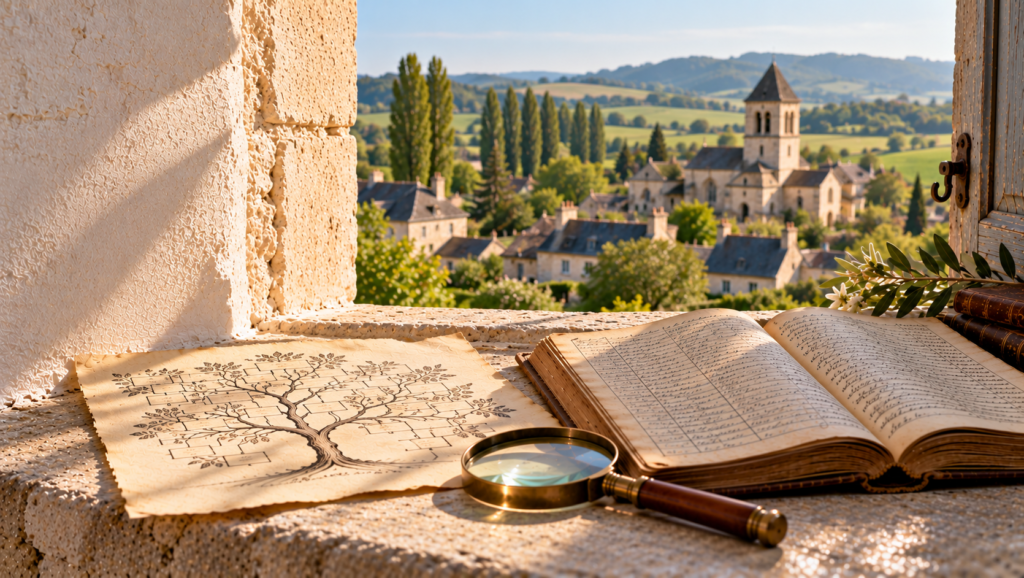
Why French genealogy is different
Civil registration of births, marriages, and deaths has been compulsory in France since 1792, and parish registers reach back much further, since royal ordinances from the sixteenth century onward required parishes to record baptisms, marriages, and burials. Much of this material has been digitized, and the departmental archives publish a great deal of it online for free.
The real challenge is not the French records. It is the crossing. To use them, you first need to know the commune (town or village) your ancestor came from, and that answer usually sits in records on this side of the Atlantic: naturalization files, passenger lists, draft registrations, and church documents.
Start with the right first step
New to French research? A seven-step path from what your family already knows to a named commune in France — the point where the records open up.
Begin the 7 steps → Already have a commune?See exactly where each record set lives — état civil, parish registers, the departmental archives — and which platform fits which job.
Find the records →Explore French Roots
État civil, parish registers, archives, and the databases that hold them.
French Regions & EmigrationBrittany, Normandy, Alsace-Lorraine, the Huguenots, and why families left.
Surnames & Name OriginsWhat French surnames mean and how they changed in America.
French Citizenship by DescentWho can prove French nationality, and how the process works.
DNA & ToolsHow to choose a DNA test for French ancestry and read your results.
Heritage TravelHow to plan a trip to your ancestral village in France.
Our guidance is researched carefully and written to be useful rather than promotional. Where a rule or record set is complex or changing, citizenship and DNA law especially, we say so plainly and point you to authoritative sources.
French Roots is reader-supported. Some links on this page are affiliate links, which means we may earn a commission if you sign up, at no extra cost to you. Read our affiliate disclosure.